A Year of the European Accessibility Act: What Actually Happened
Enforcement began in June 2025. A year later the picture is genuinely mixed — real court action, real investigations, and, depending on which source you trust, possibly not a single fine.
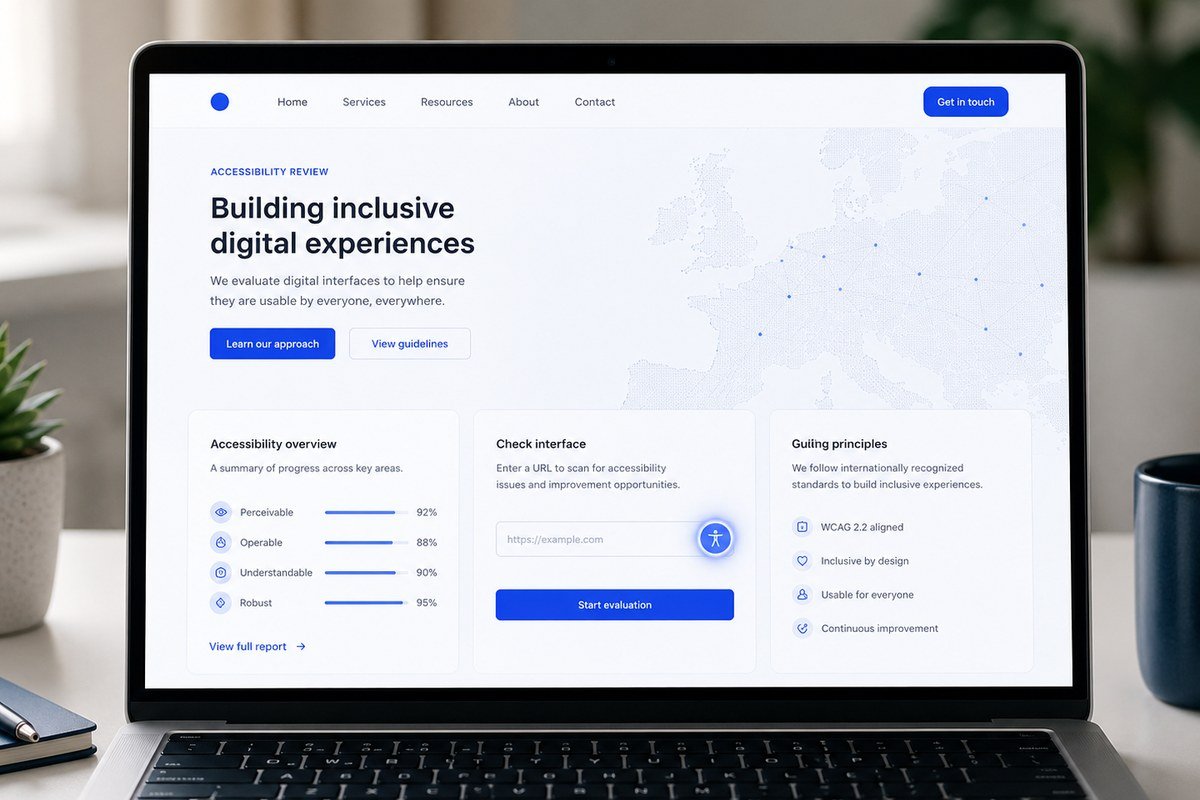
The European Accessibility Act became enforceable on 28 June 2025. A year on, you can find confident articles saying regulators across Europe are issuing fines, and equally confident articles saying not one fine has been issued anywhere in the EU. Both are still being published. Only one of them can be right, and the answer matters if you are trying to work out how urgently to act.
The European Accessibility Act has applied since 28 June 2025 to businesses selling to EU consumers above the micro-enterprise threshold of ten employees and EUR 2 million turnover. A year on, enforcement has been slower and more fragmented than predicted, with no EU-wide fine under EAA transposition, though a French court order against a major retailer is real.
The Disagreement, and Which Side of It to Believe
Published guidance on this is contradictory, so it is worth being precise. Several sources state that regulators in multiple member states are issuing fines. The accounts that show their working say something different: that as of mid-2026, no company has been fined under any national law transposing the EAA, anywhere in the European Union. The one monetary penalty in the wider European Economic Area — a daily fine on a Norwegian health portal — rests on older Norwegian law rather than the EAA. We think the careful reading is the correct one, and we would rather tell you that than repeat a scarier number.
What Did Happen, Which Is More Interesting
France moved first, and not through a regulator. Disability organisations sent formal legal notices to four major retailers within days of the deadline, then filed emergency injunctions in November 2025 when the responses were judged inadequate. In June 2026 a court ordered Carrefour to make its site and app fully accessible under a €500-per-day penalty. A parallel case against Auchan was dismissed in May 2026 on a scope question now under appeal, with the judge noting the company did not actually dispute that its site failed the standard. Elsewhere: Sweden’s telecoms regulator opened investigations on its own initiative, the Netherlands ran a mandatory self-reporting round and is auditing the businesses that stayed quiet, and in Germany a wave of Abmahnungen — formal warning letters from law firms rather than regulators — began within weeks of the national law taking effect.
“Year one produced precedent and pressure rather than penalties. Reading that as "nothing happened" is the expensive mistake.”
Whether It Applies to You Is a Two-Part Test
Two things catch people out. The first is that the law follows the customer, not the company — a business headquartered outside the EU selling to EU consumers is in scope, in the same way GDPR reached far beyond Europe. The second is the micro-enterprise exemption, which is regularly misquoted. It requires fewer than 10 employees and under €2 million in turnover. Both, not either. Above that line, if you sell to EU consumers through your website, the obligation is live and has been since June 2025.
The Rules Are Not the Same in Every Country
The EAA is a directive, so each member state wrote its own enforcement law, and the differences are larger than most summaries admit. Ireland is unusual in attaching criminal penalties, with directors personally liable. Italy runs two regimes side by side, and separately voids web design contracts that fail to provide for accessibility guidelines. Germany enforces through the Bundesnetzagentur with per-violation fines. The Netherlands added a self-reporting duty to the ACM where a service is not fully accessible. Our country pages cover what each market actually requires — Ireland, Italy, Germany, the Netherlands, France and the rest.
The Shortcut That Does Not Work
Accessibility overlay widgets — the one-line scripts that add a floating accessibility menu — do not make a site compliant, and their presence tends to signal the opposite to anyone looking. They sit on top of the page without fixing the underlying markup a screen reader actually parses. In the US, where litigation volumes are far higher, roughly 1,400 businesses with a widget installed were sued in 2025 anyway. Automated scanners have a related limit worth knowing: they catch somewhere around a quarter to a third of the issues in the standard, which makes a clean scanner report a starting point rather than a result.
What This Means If You Are a Small Business
If you are under the micro-enterprise threshold, this is not currently your problem, and nobody should sell you an audit on the basis that it is. If you are above it and selling to EU consumers, the sensible read is that year one built the machinery and year two runs it — investigations that are open do not close themselves, and a deadline that has passed does not reset. The practical version is unglamorous: real alt text, keyboard operability, sufficient contrast, labelled form fields, sensible heading structure. Those are build decisions, which is why we would rather agree accessibility scope at the start of a project than sell it back to you as a fix afterwards.
Key Takeaways
- The EAA applies based on who you sell to, not where you are based — a business outside the EU selling to EU consumers is in scope.
- Micro-enterprises are exempt: fewer than 10 employees AND under €2 million turnover. Both conditions, not either.
- The best-sourced accounts say no fine has been issued under any EAA transposition anywhere in the EU as of mid-2026.
- That is not the same as nothing happening. France produced a court order with a daily penalty, Sweden opened investigations on its own initiative, and German law firms started sending warning letters within weeks.
- Accessibility overlay widgets do not achieve compliance and are not treated as a defence.
Quick Answers
On the best-sourced accounts, no — not under any national EAA transposition anywhere in the EU as of mid-2026. The Norwegian daily penalty often cited rests on older domestic law. There has been a French court order with a daily penalty attached, which is a different thing from a regulatory fine.
Yes, if you sell to EU consumers. The law follows the customer rather than the company, so a business in the UK, US or India selling into the EU is in scope on the same terms as one in Berlin.
Only if your turnover is also under €2 million. The micro-enterprise exemption requires both conditions, and it is one of the most commonly misquoted parts of the law.
No. Overlays do not fix the underlying code and are not treated as compliance. Businesses with widgets installed have been sued regardless, and regulators tend to read a widget as evidence the site itself was never fixed.
Ready to Talk About Your Own Website?
Straight answers, no pressure — tell us what you're building.
More From the Blog
What a Real Estate Website Costs — and Why the Listings Often Cannot Be Found
Quotes run from $200 to $25,000, and the line item that breaks most of them is IDX. Worse, the way IDX is usually installed hides your listing pages from Google entirely.
Read Article
What a Law Firm Website Actually Costs — and Who Ends Up Owning It
Quotes run from $1,000 to $100,000 for what sounds like the same thing. The number matters less than a question most firms never ask until they try to leave.
Read Article
Who Actually Owns Your Website? It Is Not One Question
Paying the invoice does not automatically make the site yours. Ownership splits into four separate things, and they can end up with different people.
Read Article